Learning That
Goes Deeper
Our Cognitive Project-Based Learning model transforms the way students think, explore, and create — building lifelong learners who are curious, confident, and ready for the complexity of the 21st Century.
8th Grade
Learning Model
Excellence
of Excellence
Middle School
Bonita Springs, FL
Learning Model
At the core of Project Based Learning is the philosophy to teach "an inch wide and a mile deep." Our students engage in meaningful learning through project work.
At our campus in Bonita Springs, Florida, children are exposed to the learning process in a stimulating environment that fosters deep knowledge, critical thinking, creativity, collaboration, and communication resulting in the ability to transfer knowledge and solve problems.
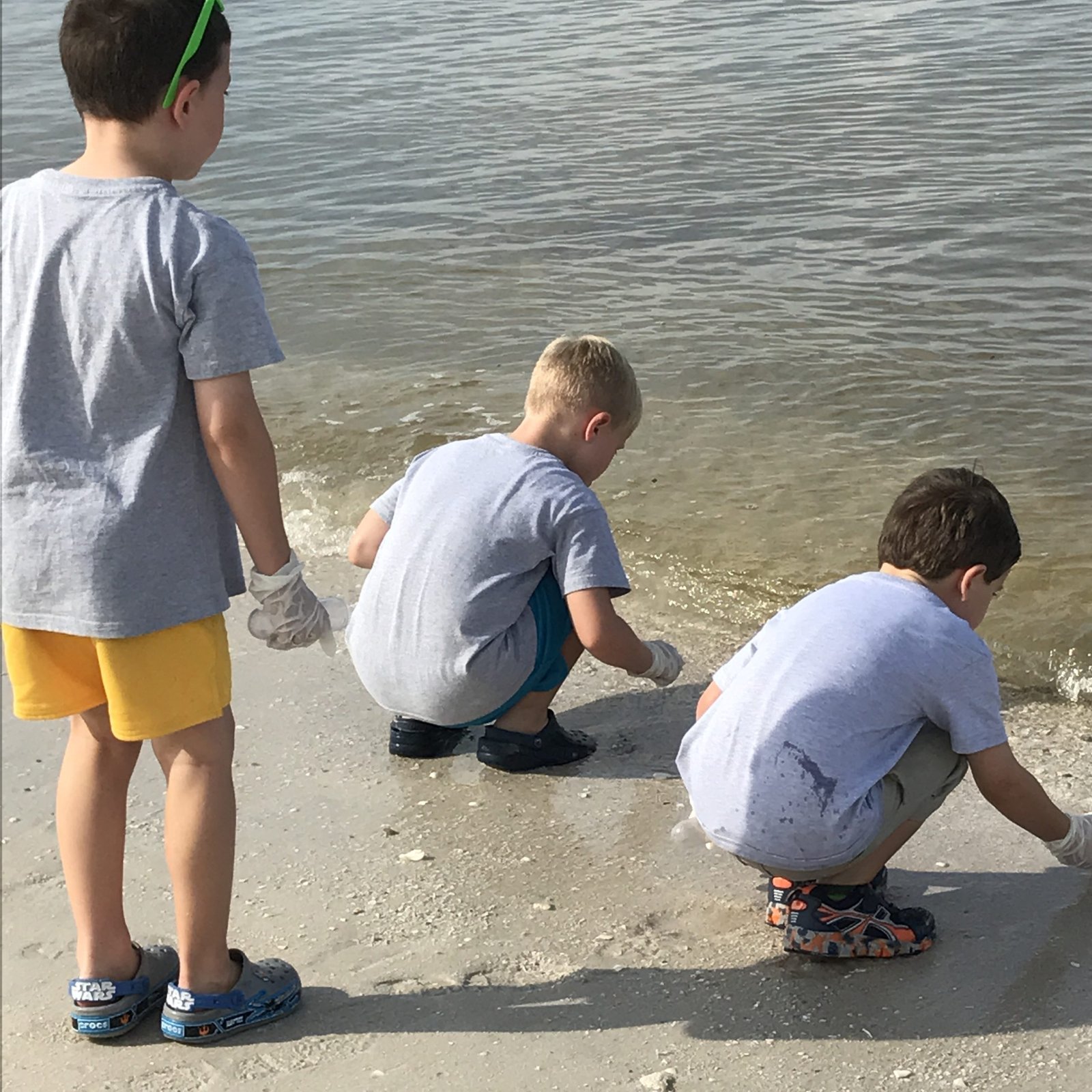
Sensory provisioned classrooms immerse students in each project, one of the many ways we pique student curiosity. Community partnerships, driving questions, qualitative and quantitative research and data collection, and student capstone work are a few aspects of our learning approach.
Driving Questions Students pursue deep inquiry through carefully crafted questions that spark curiosity and fuel research.
Community Partnerships Real world fieldwork connects learning to the local environment and people around us.
Capstone Work Students document and present their learning as meaningful final projects that are celebrated and preserved.
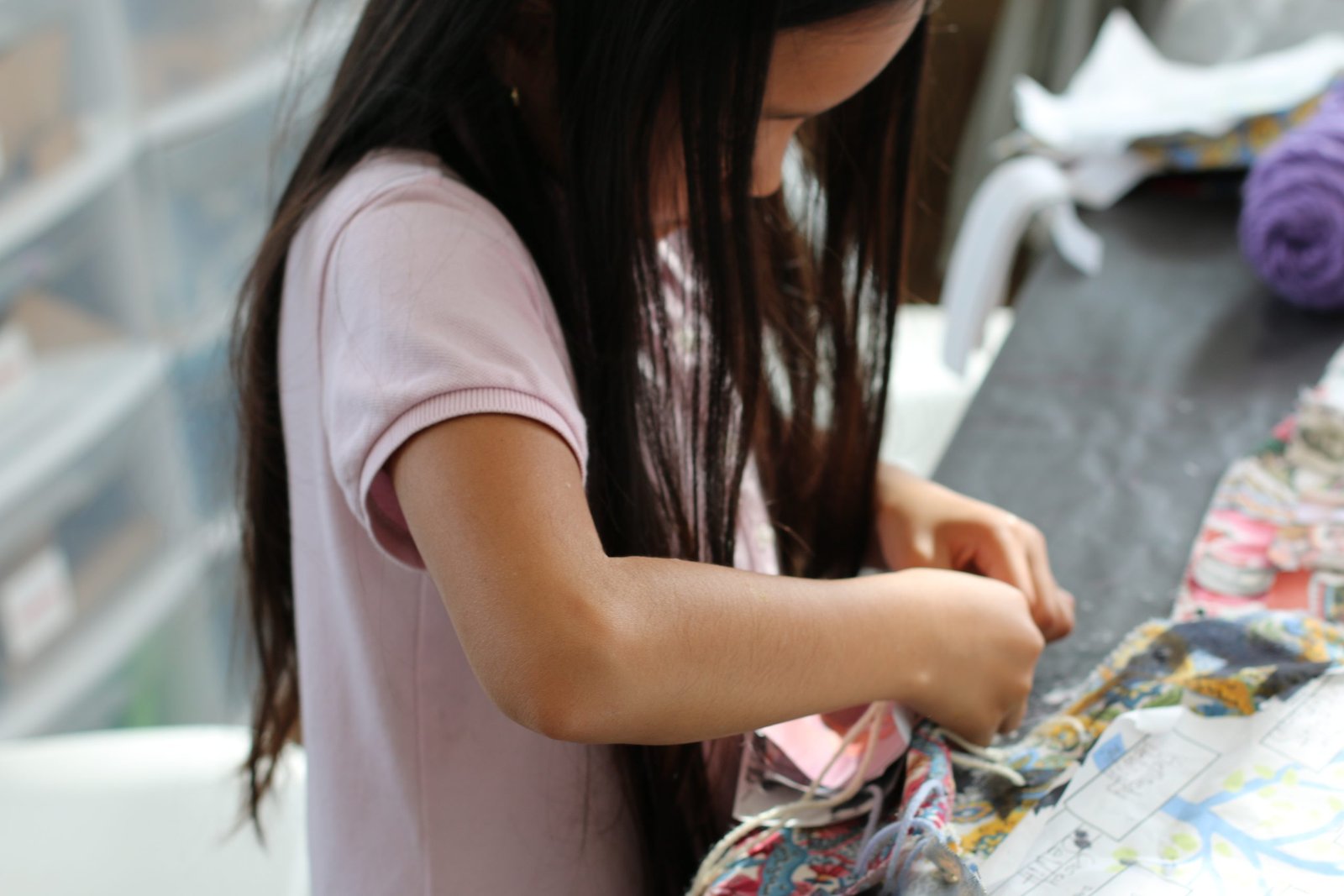
Our youngest students are innate problem solvers. Therefore, our Early Learning School encompasses toddler and Pre-K programs that encourage children's natural curiosity, within a caring and supportive environment. A hands-on approach allows our teachers to model and coach children through the learning process. We spark the imagination to develop a passion for learning, in an environment that allows for student discovery. Children are provided meaningful learning experiences within an environment of purposeful play.
Programs
From Day One

of Thinkers and Creators
Our early learning curriculum weaves together 8 core disciplines through the lens of Cognitive Project-Based Learning, ensuring every child experiences rich, connected learning.
Through learning lenses of Social Science, Science, and 21st Century Literacies we dive deep: Driving Questions, Community Partners, Fieldwork, and Student Capstones ensure learning is meaningfully experienced. PBL serves as an umbrella for academic subjects and play experiences, where our discovery of a topic is interdisciplinary and individualized.
We approach language arts through a workshop style of teaching and learning. Early learning classrooms are centers-based, for purposeful play. Literacy skills are learned through small group activities, forming foundational reading skills and rich oral language vocabulary for future reading comprehension. Project-related picture books are the core of classroom instruction, where teachers follow a read-aloud model aimed at literacy best practices. Picture book philosophy provides intentional opportunities for the development of critical thinking skills. A writing center also provides the opportunity for fine motor development.
We have whole-math classrooms, where learning experiences occur through daily routines and explicit learning experiences. Center-based games, literature, and concrete experiences ensure students learn the concepts of counting, cardinality, one-to-one correspondence, shapes, patterns, measurement, and much more.
Fifty percent of our projects are rooted within the five domains of science, including life, physical, earth and space, health, and the scientific process and vocabulary. Our block center serves as an exploration of physics concepts through the Ramps and Pathways program. Students manipulate cove molding and rolling materials, and experiment with inclines and velocity to reach targets.
The remaining fifty percent of our projects are rooted within the five domains of social science, including history, geography, civics, economics, and sociology. Projects were designed and looped for long-term memory retention, inclusive of the historical and socio-cultural period across time. Students learn lessons from the past, and apply these ideas to solving current problems.
Students explore the 5 main types of engineering, including civil, chemical, mechanical, electrical, and industrial engineering. Model making is a core aspect of C-PBL, and we build with a purpose and strategy at the core of creative work. Technology is a developmentally appropriate enhancement to instruction, through the close guidance of our early learning teachers. We engage in virtual fieldtrips, small group activities and also interview community partner professionals.
The early learning developmental domains are also interwoven throughout our program, and assessed for developmental progress. This includes social, emotional, physical, cognitive, and language development.
We observe Florida, New York, New Jersey, Massachusetts, Singapore and Finland's Whole Child Learning Standards. While we encompass these standards as a basis for instruction, we move beyond them, valuing growth, as well as student mastery and proficiency.
Our primary school includes programs for students in K through 8th grades, foundational years for early brain and learning disposition development. Cognitive Project Based Learning (C-PBL), is based upon an authentic question, in correlation with a community partner, and learning through lenses of purposeful play. This approach ensures that learning is deep and meaningful, with a focus on the application of knowledge. As an inquiry-based learning environment, all lessons begin with a driving question. Students ask further questions, hypothesize, conduct experiments, engage in research, document findings, revisit ideas, and complete individual capstones of their choosing. Each child's contributions are highlighted in an environment that shares their work through exploring communication skills and constructivism.
Eight interconnected disciplines woven through our C-PBL model to create deep, meaningful learning for students in K through 8th grade.
Through learning lenses of Social Science, Science, and 21st Century Literacies we dive deep: Driving Questions, Community Partners, Fieldwork, and Student Capstones ensure learning is meaningfully experienced. PBL serves as an umbrella for academic subjects, where our discovery of a topic is interdisciplinary and individualized.
We approach language arts through a workshop style of teaching and learning. Global learning standards and project-focused mini-lessons, centers-based activities, and small group opportunities allow for individualized learning. A strong phonetic core and creative writing ensure articulation and fluent language skills. A bedside table of books provides reading catered to the individual learner.
We take a Singaporean approach to mathematics, moving from concrete, to pictorial, and then abstract. Mini-Lessons, center activities, small groups, and mathematical building challenges ensure each student learns at their own pace, through our project lens.
Fifty percent of our projects are rooted within the five domains of science, including life, physical, earth and space, health, and the scientific process and vocabulary. Exploring science through the lens of time and progression of ideas, science has a historical foundation. Students learn scientific discoveries and theories, and apply these ideas to future possibilities for solving local, national, and global problems.
The remaining fifty percent of our projects are rooted within the five domains of social science, including history, geography, civics, economics, and sociology. Projects were designed and looped for long-term memory retention, inclusive of the historical and socio-cultural period across time. Students learn lessons from the past, and apply these ideas to solving current problems.
Students explore the 5 main types of engineering, including civil, chemical, mechanical, electrical, and industrial engineering. Model making is a core aspect of C-PBL, and we build with a purpose and strategy at the core of creative work.
Technology is a developmentally appropriate enhancement to instruction. Proper care of devices, internet safety, keyboarding, and creative digital media skills are aspects of our program. Equally, we engage in virtual field trips and interview community partner professionals.
We observe Florida, New York, New Jersey, Massachusetts, Singapore and Finland's Whole Child Learning Standards. While we encompass these standards as a basis for instruction, we move beyond them, valuing growth, as well as student mastery and proficiency.
Your child's future begins at Discovery Day Academy. We are actively accepting applications for summer camp and fall Toddlers through 8th Grade programs.